
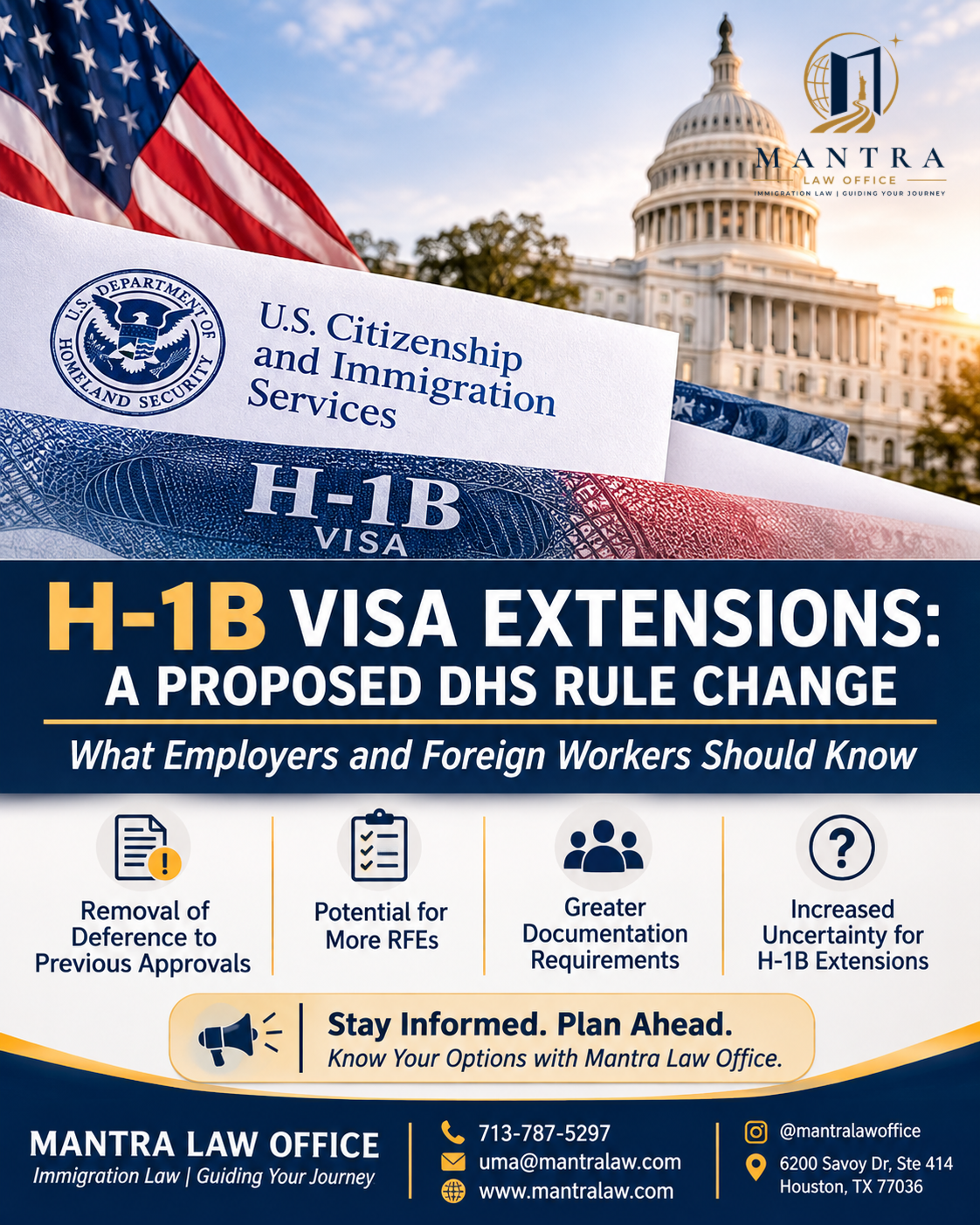
A proposed rule from the U.S. Department of Homeland Security (DHS) could bring significant changes to how U.S. Citizenship and Immigration Services (USCIS) reviews H-1B visa extensions.
The proposal, titled “Removing Deference to Prior USCIS Determinations of Eligibility,” could change how USCIS evaluates previously approved employment-based petitions, potentially creating additional scrutiny for workers seeking extensions of their authorized stay.
For H-1B employees and U.S. employers, understanding this proposed change is important when planning future extensions and preparing immigration documentation.
What Is the Proposed DHS Rule?
Published in the Federal Register on October 14, 2026, the proposed rule seeks to eliminate the existing regulatory requirement that USCIS generally give deference to certain previous approvals when reviewing extension requests involving the same parties and underlying facts.
Under the existing regulation, USCIS generally gives deference to a previous eligibility determination unless there is a material error, a material change in circumstances, or new material information that adversely affects eligibility.
DHS now proposes removing this requirement so that USCIS officers can independently review each petition based on the evidence submitted.
The proposal would apply to Form I-129 petitions for nonimmigrant workers, including H-1B and other employment-based nonimmigrant classifications.
How Could This Affect H-1B Visa Extensions?
If finalized, the proposed rule could change the extension review process in several ways.
1. More Detailed Case Reviews
USCIS officers would no longer be required to begin with deference to a previous approval. They could independently reassess whether the worker and employer continue to meet the applicable eligibility requirements.
2. Potential Increase in Requests for Evidence (RFEs)
DHS anticipates that removing the deference requirement could result in more Requests for Evidence (RFEs), requiring employers and employees to provide additional supporting documentation.
3. Greater Documentation Requirements
Employers may need to prepare more comprehensive evidence demonstrating that the position, job duties, employer-employee relationship, and other relevant eligibility requirements remain consistent with the applicable visa classification.
4. Increased Uncertainty During Extensions
Additional scrutiny and potential RFEs could increase processing burdens and create uncertainty for employers and foreign workers planning their continued employment in the United States.
Does This Mean Previous H-1B Approvals Will No Longer Matter?
Not necessarily.
The proposed rule would remove the requirement to defer to previous approvals, but it would not prohibit USCIS officers from considering prior approval decisions when relevant.
Instead, officers would have greater discretion to independently evaluate the facts and evidence submitted with each extension petition.
Importantly, a previous approval would not automatically establish eligibility for a future extension.
What Should H-1B Employers and Employees Do?
Although the proposal has not been finalized, employers and foreign workers can take practical steps to prepare:
- Review existing H-1B petitions and approval notices.
- Maintain updated employment records and supporting documentation.
- Ensure that job duties, work locations, and employment details are accurately documented.
- Review any changes in job responsibilities or employment arrangements.
- Consult an immigration attorney before filing an extension petition.
Preparing a well-documented petition can help address eligibility questions and reduce avoidable complications during the adjudication process.
Is the Proposed Rule Already in Effect?
No. It remains a proposed rule as of November 12, 2026.
DHS published the proposal on October 14, 2026, and invited public comments through November 13, 2026.
The proposal must go through the applicable rulemaking process before it can become a final regulation. Until then, the existing regulatory framework remains in place.
Employers and H-1B workers should monitor official USCIS and DHS announcements for further developments.
How Mantra Law Office Can Help
Changes in immigration regulations can affect both employers and foreign professionals. Understanding how proposed policies may influence future visa extensions is an important part of immigration planning.
At Mantra Law Office, we help individuals and businesses understand U.S. immigration requirements, evaluate their circumstances, and navigate employment-based immigration matters.
If you are planning an H-1B extension or have questions about changing immigration policies, contact our office for guidance.
Mantra Law Office
Immigration Law | Guiding Your Journey.
- Phone: 713-787-5297
- Email: info@mantralaw.com
- Website: https://mantralaw.com
- Address: 6200 Savoy Dr, Ste 414, Houston, TX 77036
Frequently Asked Questions
1. Will the proposed rule affect all H-1B extensions?
The proposal would remove the deference requirement for Form I-129 requests, including H-1B extensions. Its practical impact will depend on the final rule and individual case circumstances.
2. Could H-1B extensions receive more RFEs?
Yes. DHS anticipates that removing the deference requirement could increase RFEs because officers may conduct more independent reviews of eligibility.
3. Does a previous H-1B approval guarantee an extension?
No. Applicants and petitioning employers must continue to demonstrate eligibility for each requested immigration benefit.
4. Has DHS finalized the proposed rule?
No. As of November 12, 2026, it remains a proposed rule, with public comments due November 13, 2026.
Disclaimer
This article is intended for general informational purposes only and does not constitute legal advice. The proposed rule may change during the rulemaking process. Immigration outcomes depend on individual circumstances and applicable law. Consult a qualified immigration attorney regarding your specific situation.