

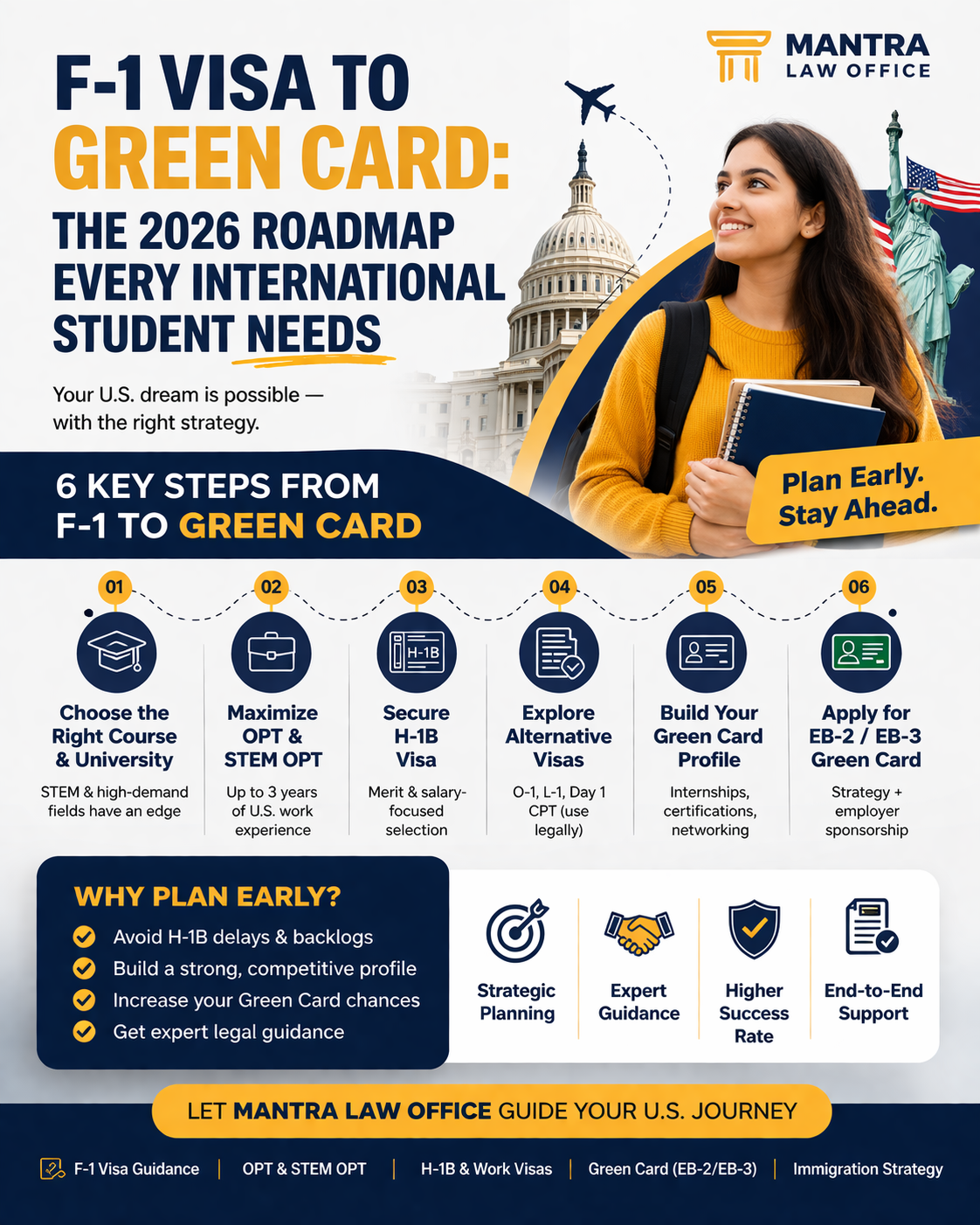
If you’re an international student—or planning to become one—this roadmap will help you understand your real options.
Step 1: Start with the Right Course & University Strategy
Your journey doesn’t start after graduation—it starts before you even apply.
In 2026, U.S. immigration trends strongly favor:
- STEM (Science, Technology, Engineering, Math) programs
- Universities with strong employer connections
- Courses aligned with skill shortages
Why this matters:
STEM graduates get extended work opportunities, giving them more chances to secure long-term visas.
Step 2: Use OPT & STEM OPT Extension Strategically
After completing your degree, you can work under:
- OPT (Optional Practical Training) – 12 months
- STEM OPT Extension – Additional 24 months
This gives STEM students up to 3 years of U.S. work experience.
2026 Trend:
Employers now prefer candidates who can convert to long-term visas quickly, so your job choice matters more than ever.
Step 3: Transition to H-1B (The Biggest Hurdle)
The H-1B visa remains the most common bridge—but also the most difficult.
Key realities in 2026:
- Selection is increasingly merit and salary-focused
- Fewer chances for low-paying or entry-level roles
- Strong preference for specialized skills
Pro Tip:
Students working in high-demand industries (AI, cybersecurity, healthcare tech) have significantly better chances.
Step 4: Explore Alternative Work Visas (Smart Students Are Doing This)
In 2026, relying only on H-1B is risky. Smart applicants are diversifying options:
Popular alternatives:
- O-1 Visa (for individuals with extraordinary ability)
- L-1 Visa (intra-company transfers)
- Day 1 CPT Programs (used cautiously and legally)
Trend Insight:
Many students are building portfolios, research profiles, and personal brands to qualify for O-1 visas earlier.
Step 5: Employment-Based Green Card Pathways
Once you secure a work visa, the next step is permanent residency.
Common routes:
- EB-2 (Advanced degree holders)
- EB-3 (Skilled workers)
However, in 2026:
- Backlogs for Indian applicants remain significant
- Priority dates are moving slowly
- Strategic employer sponsorship is critical
Step 6: Build a “Green Card Profile” Early
This is where most students go wrong—they wait too long.
In today’s landscape, you should start building your profile during your studies:
- Internships with recognized companies
- Research publications
- Industry certifications
- Networking with employers
Why this matters:
Immigration is no longer just paperwork—it’s profile-based selection.
Common Mistakes to Avoid
- Choosing low-demand degrees
- Ignoring visa timelines
- Depending only on H-1B lottery
- Not consulting an immigration attorney early
Conclusion: It’s No Longer Just a Degree—It’s a Strategy
In 2026, the journey from F-1 visa to Green Card is no longer automatic or linear.
It requires:
- Smart academic choices
- Strategic career planning
- Early legal guidance
At Mantra Law Office, we help international students turn their U.S. education into a long-term success plan—by aligning immigration strategy with career growth.
Ready to Plan Your U.S. Future?
Don’t wait until graduation to think about your immigration path.
Start early. Plan smart. Stay ahead.