

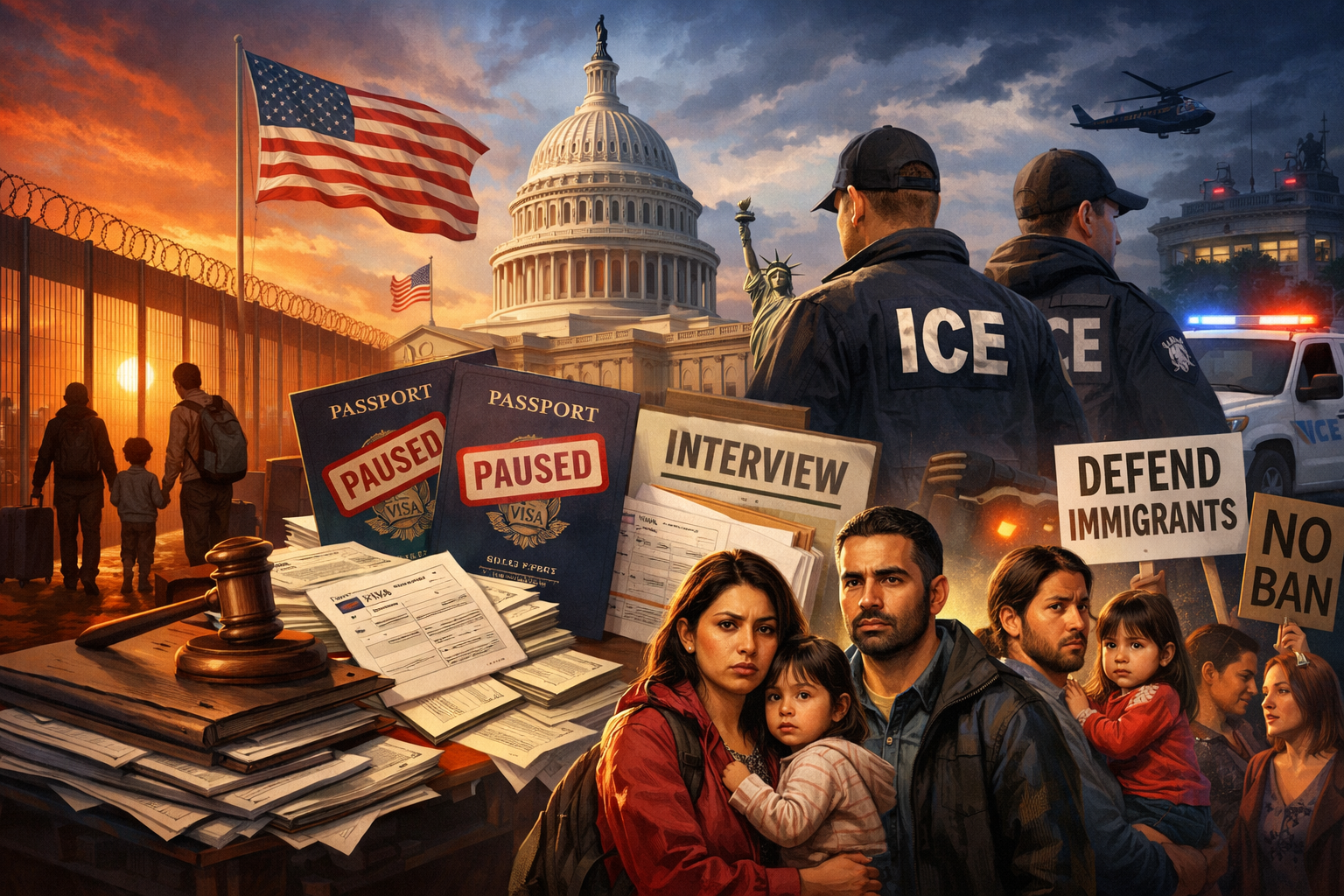
In late 2025 and early 2026, the United States underwent one of the most significant shifts in immigration policy in decades. Driven by a new administration and sweeping legislative changes, policy now emphasizes border security, stricter visa rules, expanded enforcement powers, and reduced legal immigration — all amid growing public debate.
⸻
- A Major Pause on Immigrant Visas
One of the most striking changes is the indefinite pause on immigrant visa issuances for nationals of roughly 75 countries starting January 21, 2026. This applies to family- and employment-based green card visas, not tourist or student visas, and is aimed at tightening vetting procedures.
Impact on Immigrants:
• Long waits and uncertainty for families and workers from affected countries.
• Legal challenges and consular processing delays.
• Ongoing re-review of pending cases from “countries of concern.”
⸻
- Tighter Visa and Immigration Processing Rules
Beyond visa pauses, several procedural overhauls have been implemented:
Mandatory In-Person Interviews
As of September 2025, almost all non-immigrant visa applicants (students, professionals, tourists) must attend in-person interviews — eliminating most “Dropbox” interview waivers. This is expected to cause longer wait times and higher costs.
Rising Fees
Premium processing fees for expedited immigration filings are increasing, and new processing charges like the “visa integrity fee” are being introduced for non-immigrant visas.
Work Authorization Changes
The validity of some work permits has been cut from five years to as little as 18 months to allow more frequent vetting.
⸻
- Expanded Enforcement Powers
The administration has strengthened enforcement dramatically:
ICE Raids and Operations
National immigration enforcement actions — including “Operation Catch of the Day” in Maine — are targeting specific communities with heavier ICE presence.
Administrative Warrants
Recent memos allow ICE to enter homes using administrative warrants rather than traditional judicial ones, a move criticized as undermining constitutional protections.
Increased Deportations
Deportations have surged, with border and interior enforcement contributing to a net drop in immigration and, for the first time in decades, net negative migration — more people left the U.S. than entered in 2025.
⸻
- Legislative and Policy Drivers
The “One Big Beautiful Bill Act”
This major law significantly increases funding for border barriers, detention beds, and immigration enforcement capacity — marking a shift toward deterrence rather than expansion of legal pathways.
Executive Orders and Policy Directives
Executive actions have expanded expedited removals, penalized sanctuary jurisdictions, and emphasized enforcement priorities under “Protecting the American People Against Invasion.”
⸻
- Wider Reactions and Controversies
Protests and Public Backlash
Thousands of demonstrations have erupted on U.S. campuses and in urban centers, with students, workers, and immigrant communities expressing opposition to strict immigration limits.
Legal Challenges
Lawyers and immigrant advocacy groups are preparing lawsuits against policies that pause asylum adjudications and halt benefits for certain nationals.
⸻
- What This Means for Immigrants Worldwide
For Family and Employment-Based Applicants
• Visa delays and pauses could stretch for months or years.
• Processes like green card sponsorships face increased scrutiny.
For Students and Workers
• Mandatory interviews and higher fees mean longer waits.
• Tighter vetting might affect admission timelines and job offers.
For Asylum Seekers
• Asylum decisions have been paused or heavily limited for many applicants under current policies.
⸻
Conclusion: A More Restrictive U.S. Immigration Landscape
The U.S. is moving toward a more restrictive and enforcement-centric immigration regime, emphasizing security, deterrence, and vetting — often at the expense of ease of entry and family reunification. These changes will continue to evolve amidst legal challenges, political debates, and international reactions.