

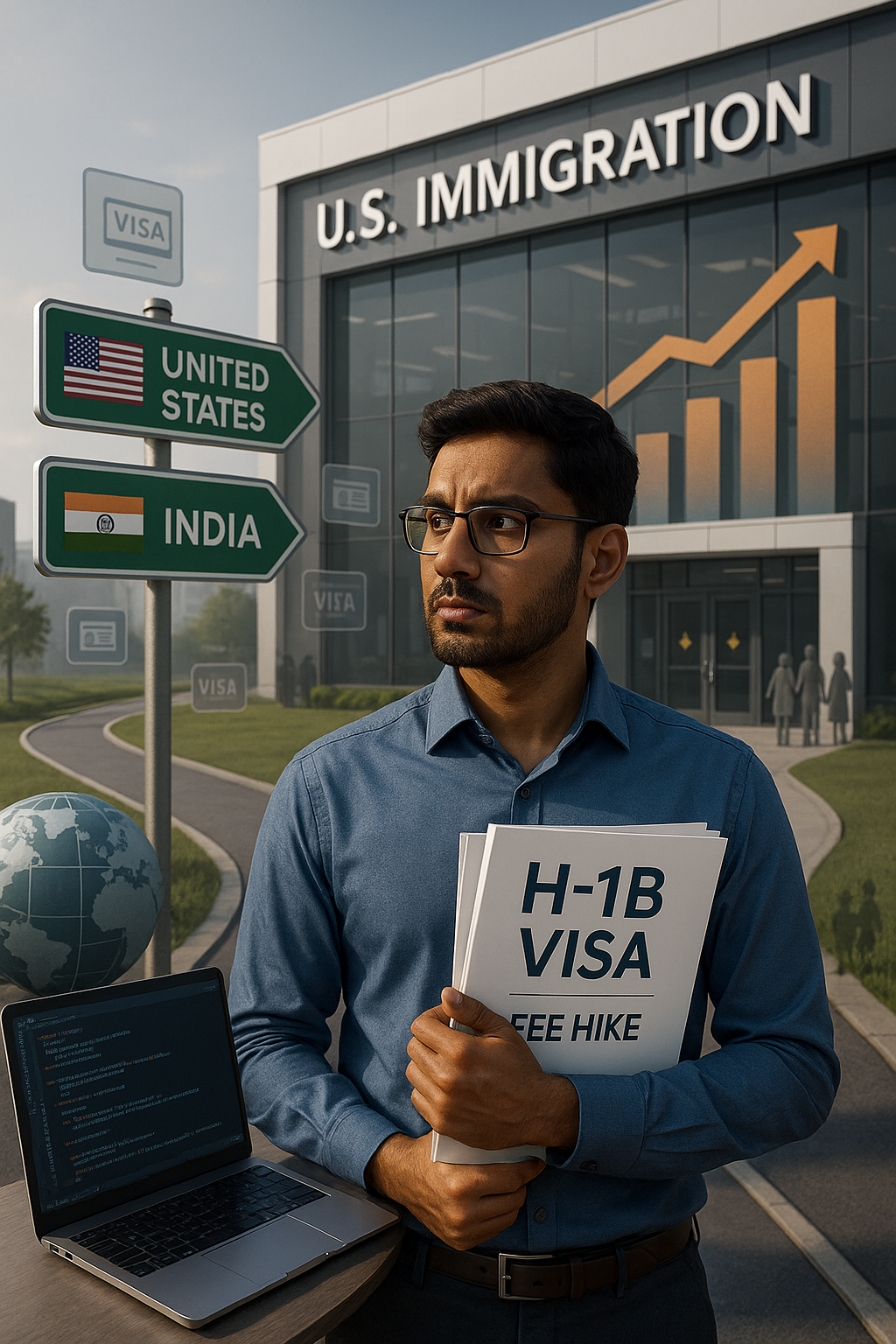
A Comprehensive Legal Insight by MANTRA LAW
The United States has long been the top destination for skilled Indian tech talent, with the H-1B visa serving as the primary pathway for employment-based immigration. However, recent H-1B fee hikes introduced by the U.S. Citizenship and Immigration Services (USCIS) have caused considerable concern—especially among Indian professionals, employers, and families preparing for visa processing.
The fee changes aren’t just a marginal increase. They reshape the financial, logistical, and long-term planning involved in obtaining an H-1B, raising important questions about affordability, employer sponsorship, and the future of global tech mobility.
At MANTRA LAW, we break down what these changes mean, how they impact Indian applicants, and what alternative strategies you should consider.
1. What Are the New H-1B Fee Changes?
The latest USCIS fee adjustments—some of the most significant in years—affect multiple stages of the H-1B process. Key changes include:
✔ Increased H-1B Registration Fee
- Previous fee: $10
- New fee: $215
- Effective date: April 2024
This is a massive jump, especially for large employers filing hundreds of registrations each year.
✔ Higher I-129 Filing Fee (H-1B Petition)
- For employers with >25 employees: Fee increased substantially
- For small employers: Slightly reduced burden
- Additional fraud prevention, anti-trafficking, and asylum program surcharges add to the total cost.
✔ Fee Differences Based on Company Size
Large tech firms—where many Indian workers are employed—see the biggest increases.
2. Why Are Indian Tech Professionals Most Affected?
Over 73% of all H-1B visas are historically granted to Indian nationals, especially those in IT, engineering, finance, and emerging tech fields.
The fee hikes impact Indian workers due to:
► Heavy concentration in H-1B-dependent industries
Most Indian applicants work in roles that require consistent visa filings and renewals.
► Dual-income families relying on visa stability
Fee hikes amplify stress for households waiting for renewals, extensions, or dependent visas (H-4).
► Delayed green card timelines
Many Indian applicants already face 10–20+ year waiting periods for U.S. permanent residency.
Higher fees mean higher cumulative immigration costs over time.
3. “Disrupting Families”: Why This Issue Goes Beyond Money
As highlighted by several international news outlets, including Al Jazeera, the fee increase does more than affect budgets—it interferes with stability and planning.
Here’s how:
🔸 Increased Costs for H-4 Dependent Applications
Families often juggle multiple applications:
- H-4 visa for spouse
- H-4 EAD (work authorization)
- Renewals every 1–3 years
Each of these now costs more.
🔸 Higher Employer Reluctance to Sponsor Families
Smaller employers—who already struggle with immigration costs—may avoid hiring candidates needing sponsorship.
🔸 Pressure on Workers to Stay with the Same Employer
With higher fees, individuals may delay job changes or risk status issues.
Overall, the fee hikes amplify uncertainty, especially for families awaiting long-term immigration solutions.
4. How Are U.S. Employers Responding?
Employer reactions vary across the tech ecosystem:
✔ Large Tech Firms
Companies like Google, Amazon, Meta, and Microsoft may continue sponsorship but with stricter internal vetting.
✔ Mid-Size Firms
They may reduce the number of H-1B registrations due to increased costs.
✔ Startups & SMEs
These businesses are most affected—they often shift hiring to:
- Canada
- Europe
- Remote-first roles
Increased financial pressure may reduce sponsorship opportunities for Indian talent.
5. Will These Fee Hikes Reduce H-1B Applications?
The likely outcome:
Not significantly, but strategically.
Demand for H-1Bs has historically exceeded supply—by hundreds of thousands.
However, employers may:
- File fewer registrations
- Prioritize senior or high-value roles
- Avoid sponsoring entry-level positions
- Increase reliance on OPT and STEM OPT candidates
This changes the competitive landscape for Indian applicants.
6. Alternative Pathways for Indian Tech Professionals
At MANTRA LAW, we encourage applicants to explore diverse immigration strategies to reduce dependency on the H-1B lottery.
⭐ U.S. Immigration Alternatives
- O-1 Visa (Extraordinary Ability)
Ideal for skilled tech professionals with accomplishments, publications, or senior roles. - L-1 Visa (Intracompany Transfer)
Suitable for employees of multinational companies with overseas offices. - EB-1 & EB-2 NIW Green Cards
For individuals with exceptional skillsets or national importance contributions.
⭐ Global Alternatives (For Employers or Individuals)
- Canada Express Entry + Work Permit
- UK Skilled Worker Visa
- Australia Skilled Migration
- EU Tech Visas (Germany, Portugal, France)
Many Indian professionals are diversifying their plans due to U.S. unpredictability.
7. How MANTRA LAW Can Help
Navigating the post-fee-hike immigration landscape requires strategic guidance.
At MANTRA LAW, we provide:
✔ Visa Pathway Evaluation
We analyze your background to recommend the best available routes (H-1B, O-1, L-1, NIW).
✔ Employer Compliance Guidance
Helping companies understand new cost structures and reduce risk.
✔ Family-Centered Legal Planning
Support for H-4 visas, EAD applications, and long-term green card planning.
✔ Document Preparation & Error-Free Filing
Ensuring that every application meets the new USCIS standards.
Final Thoughts: The Road Ahead
The H-1B fee hikes represent a significant shift in U.S. immigration policy—one that places increased pressure on Indian professionals, employers, and families already navigating a complex system.
However, with the right legal strategy, alternative pathways, and careful planning, skilled professionals can still build successful careers in the United States.
If you or your organization needs guidance, MANTRA LAW is here to help every step of the way.