

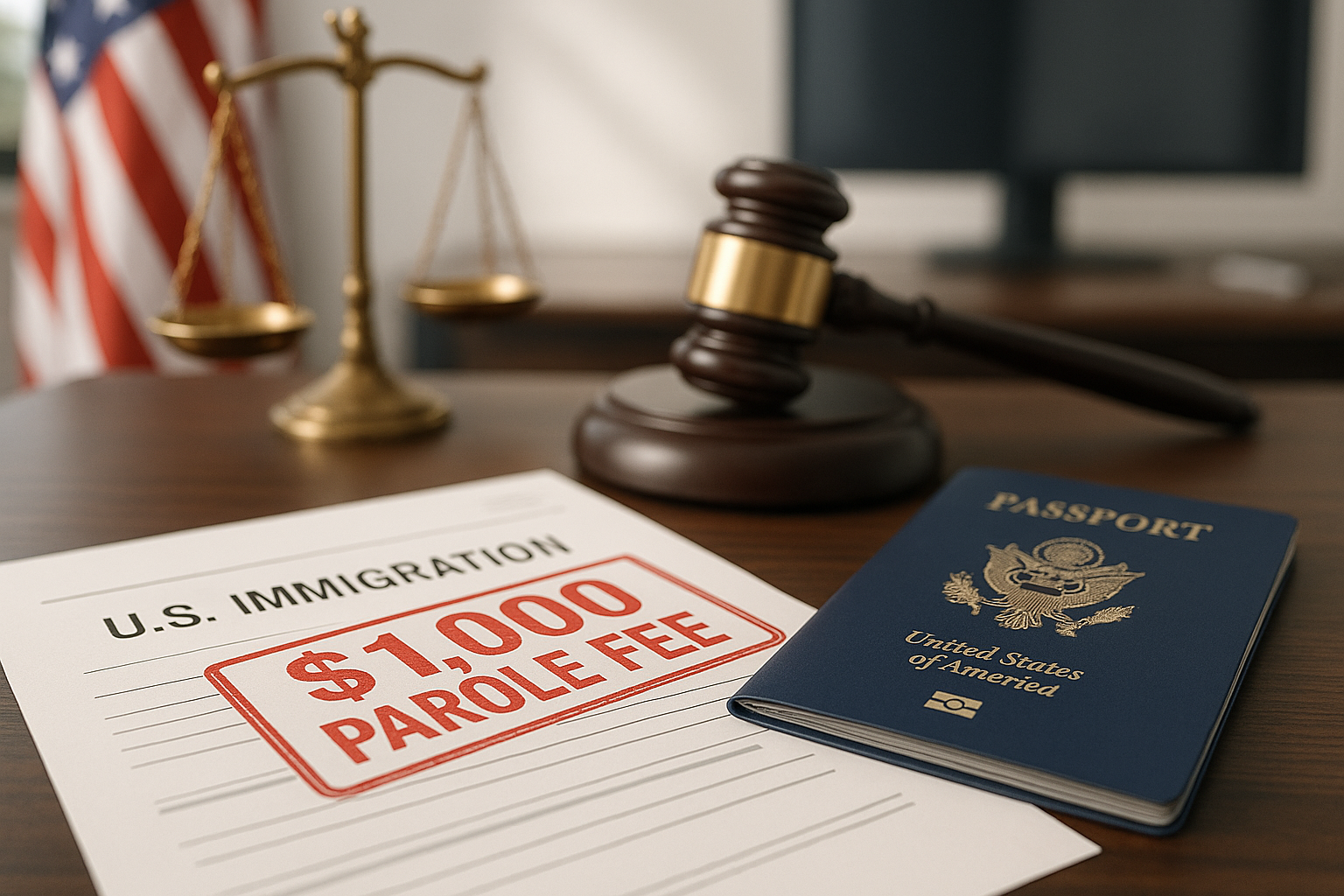
The U.S. immigration landscape continues to evolve, and one of the most recent—and significant—updates is the new $1,000 parole fee introduced by the Department of Homeland Security (DHS).
This change directly affects individuals who request parole into or within the United States, including many Indian nationals navigating complex immigration pathways.
At Mantra Law Office, we believe in equipping our clients with the knowledge they need to make informed decisions. Below is a comprehensive breakdown of what this new fee means, who must pay it, who is exempt, and how Indian applicants can prepare.
📌 What Is the New Parole Fee?
Beginning 2025, DHS now requires individuals who are granted parole (either at the border or inside the U.S.) to pay a $1,000 “Parole Fee.”
This fee is part of USCIS’s broader effort to:
- Recover operational costs
- Reduce processing backlogs
- Strengthen oversight of parole programs
- Fund humanitarian review mechanisms
Unlike other application fees, this parole fee applies only when parole is approved, not at the time of filing.
📌 Who Will Be Affected?
The fee applies to most individuals who are:
1. Requesting Parole at the U.S. Border or Port of Entry
Indian nationals arriving in the U.S. and seeking discretionary parole due to emergency or urgent humanitarian reasons will now face this additional cost once approved.
2. Applying for “Re-Parole” Within the U.S.
Many individuals—especially those needing to maintain lawful presence temporarily—request re-parole while awaiting long-term immigration solutions.
Re-parole approvals will also trigger this fee.
3. Parolees in Programs Like:
- Case-by-case humanitarian parole
- Family emergency parole
- Certain employment-related parole requests
- Study, research, or medical-based urgent parole
📌 Who Is Exempt from the $1,000 Fee?
USCIS has introduced targeted exemptions to ensure vulnerable applicants are not penalized.
Indian applicants may fall under any of the following categories:
✔ 1. Individuals With Pending Adjustment of Status (Green Card Applicants)
If you have already filed Form I-485 (Adjustment of Status), you will not be charged the fee for re-parole during the time your case is pending.
✔ 2. Minor Children in Certain Humanitarian Programs
Some unaccompanied children and humanitarian parolees may receive exemptions depending on DHS policy.
✔ 3. Individuals Paroled Under Government-Sponsored Programs
If your parole was initiated directly by a U.S. government agency (rare but possible), you may also qualify for a fee exemption.
📌 What This Means for Indian Nationals
Indian nationals often rely on parole for a variety of reasons:
- To attend urgent family matters
- To maintain legal status while waiting for long-term immigration processing
- For humanitarian emergencies
- For medical treatment
- For bridging gaps between visa statuses
With long visa backlogs—especially in categories like EB-2, EB-3, and family-based visas—many Indian applicants routinely require re-parole.
The new fee introduces an additional financial burden, so planning becomes critical.
📌 How Indian Clients Can Prepare
1. Evaluate Whether Re-Parole Is Essential
If you are awaiting an approved work permit, green card, or change of status, consult an attorney to determine if re-parole is actually necessary.
2. Consider Filing Adjustment of Status (If Eligible)
Since those with a pending I-485 are exempt, eligible individuals should consider filing sooner rather than later.
3. Budget for the Additional Cost
Families especially should prepare financially, as each individual granted parole must pay the fee separately—even children, unless exempted.
4. Keep Documentation Ready
Parole cases—especially for Indian nationals—often require detailed humanitarian or urgent-need documentation.
Financial proof
Medical records
Affidavits
Employer letters
Travel evidence
Good preparation leads to faster decisions and reduces the need for repeated re-parole requests.
5. Stay Updated on DHS Announcements
The parole landscape is fluid. Policy updates may introduce:
- New exemptions
- Revised filing processes
- Digital processing under USCIS modernization rules
- Fee waivers for special humanitarian categories
Mantra Law Office monitors these changes and advises clients in real time.
📌 How Mantra Law Office Can Help
At Mantra Law Office, our team specializes in navigating complex immigration updates, including parole requests, re-parole filings, and long-term immigration strategies for Indian nationals.
We assist with:
- Humanitarian parole filings
- Re-parole strategy and preparation
- Green card alternatives and eligibility planning
- Bridging gaps caused by visa backlogs
- Comprehensive documentation and legal representation
Our goal is to help you stay legally protected, minimize costs, and create a stable immigration path for you and your family.
📌 Final Thoughts
The new $1,000 parole fee is a major change with real implications, particularly for Indian nationals navigating already long and uncertain immigration queues.
Understanding how the fee works—and whether you qualify for an exemption—can save both time and money.
As policies continue to shift, having the right legal guidance becomes essential.