

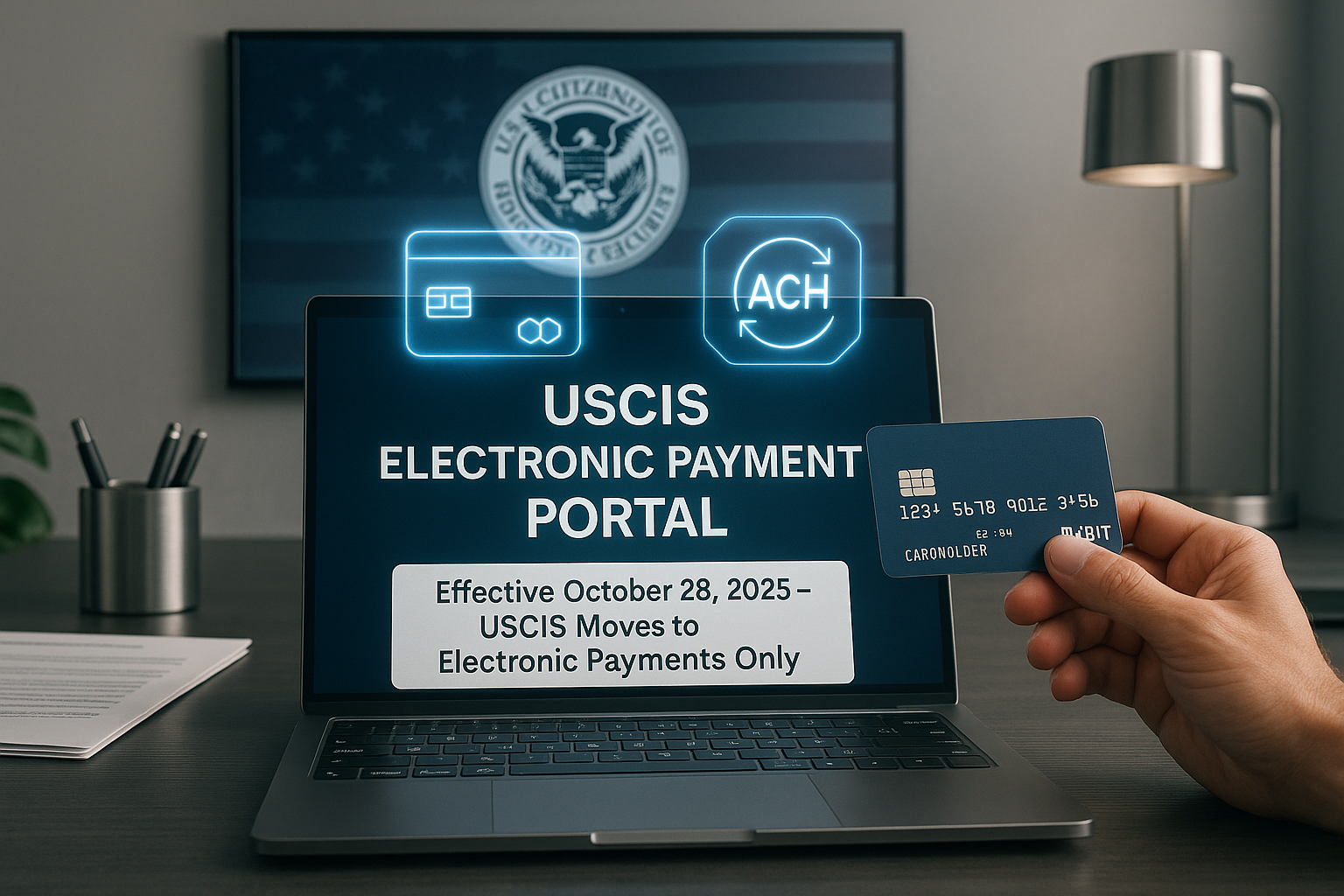
The U.S. Citizenship and Immigration Services (USCIS) has officially announced a major procedural update that will take effect on October 28, 2025 — all payments for USCIS applications and petitions must now be made electronically. Traditional methods such as checks and money orders will no longer be accepted, marking a significant step toward the agency’s ongoing efforts to modernize, streamline, and digitize its operations.
This change affects all paper-submitted USCIS forms, making it crucial for applicants, attorneys, and representatives to understand the new payment methods and avoid potential delays or denials.
Why the Shift to Electronic Payments?
USCIS has been gradually moving toward a more digital ecosystem. By adopting electronic payment methods such as ACH transfers, debit cards, and credit cards, the agency aims to:
- Improve processing efficiency and reduce administrative errors caused by bounced checks or incorrect payment amounts.
- Enhance financial security by eliminating the risks associated with lost or stolen paper payments.
- Simplify payment verification and reduce the turnaround time for application processing.
While the transition aligns with the broader federal government’s modernization goals, it may initially pose challenges for applicants unfamiliar with digital banking systems — particularly those who traditionally rely on money orders or checks.
Accepted Payment Methods
As per the new rule, only electronic payments will be accepted for all paper-filed applications and petitions. The approved methods include:
- ACH Transfers – Direct bank-to-bank transfers from a U.S.-based checking or savings account.
- Credit Card Payments – Using major credit cards such as Visa, MasterCard, American Express, or Discover.
- Debit Card Payments – Direct deductions from your bank account via debit transactions.
Applicants must ensure that all bank or card details are accurate and that sufficient funds are available before initiating the transaction.
What Happens If Your Payment Fails?
The USCIS will attempt to process a failed payment one more time. However, if the second attempt is also rejected due to insufficient funds, incorrect details, or card limits, the application will be denied. This applies to both ACH transfers and credit/debit card payments.
To avoid such complications, applicants should:
- Double-check all banking details before submission.
- Ensure adequate account balance or credit availability.
- Use stable and reliable financial institutions for ACH transfers.
A small administrative error can lead to costly consequences — including delays, re-filing costs, and missed deadlines.
How Mantra Law Office Ensures Smooth USCIS Payments
At Mantra Law Office, we understand that immigration filings already involve complex documentation and tight timelines. To help our clients navigate this transition effortlessly, we handle all USCIS filing payments electronically through ACH transfers and credit/debit card payments on behalf of our clients.
Our streamlined payment process ensures:
- Zero rejections or denials due to failed payments.
- Secure and traceable transactions through verified banking systems.
- Peace of mind for clients who may prefer paying via traditional methods like checks or money orders.
Clients can simply provide the filing fee amount via check or money order to Mantra Law Office, and we process the USCIS payment digitally — ensuring compliance with the new federal policy while eliminating the risk of delays.
Key Takeaways for Applicants
- Starting October 28, 2025, USCIS will no longer accept checks or money orders.
- Only electronic payments (ACH, debit, or credit cards) will be valid for paper-filed applications.
- Failed payments will lead to application denials if not resolved promptly.
- Applicants should review financial details carefully before submission.
- Mantra Law Office offers a trusted, efficient payment handling system to make this transition completely hassle-free.
Final Thoughts
The USCIS’s move toward electronic payments is a progressive and necessary change that supports faster, more reliable immigration processing. While the shift might initially feel inconvenient for some, it ultimately benefits applicants by reducing human error, improving transparency, and expediting application handling.
At Mantra Law Office, our team remains fully prepared to help you navigate this change seamlessly. From completing accurate filings to managing secure electronic payments, we ensure that your immigration journey stays on track — efficiently and without interruption.
Need help with your USCIS filing or payment process?
Contact Mantra Law Office today to ensure your application is filed and paid for accurately, safely, and on time.