

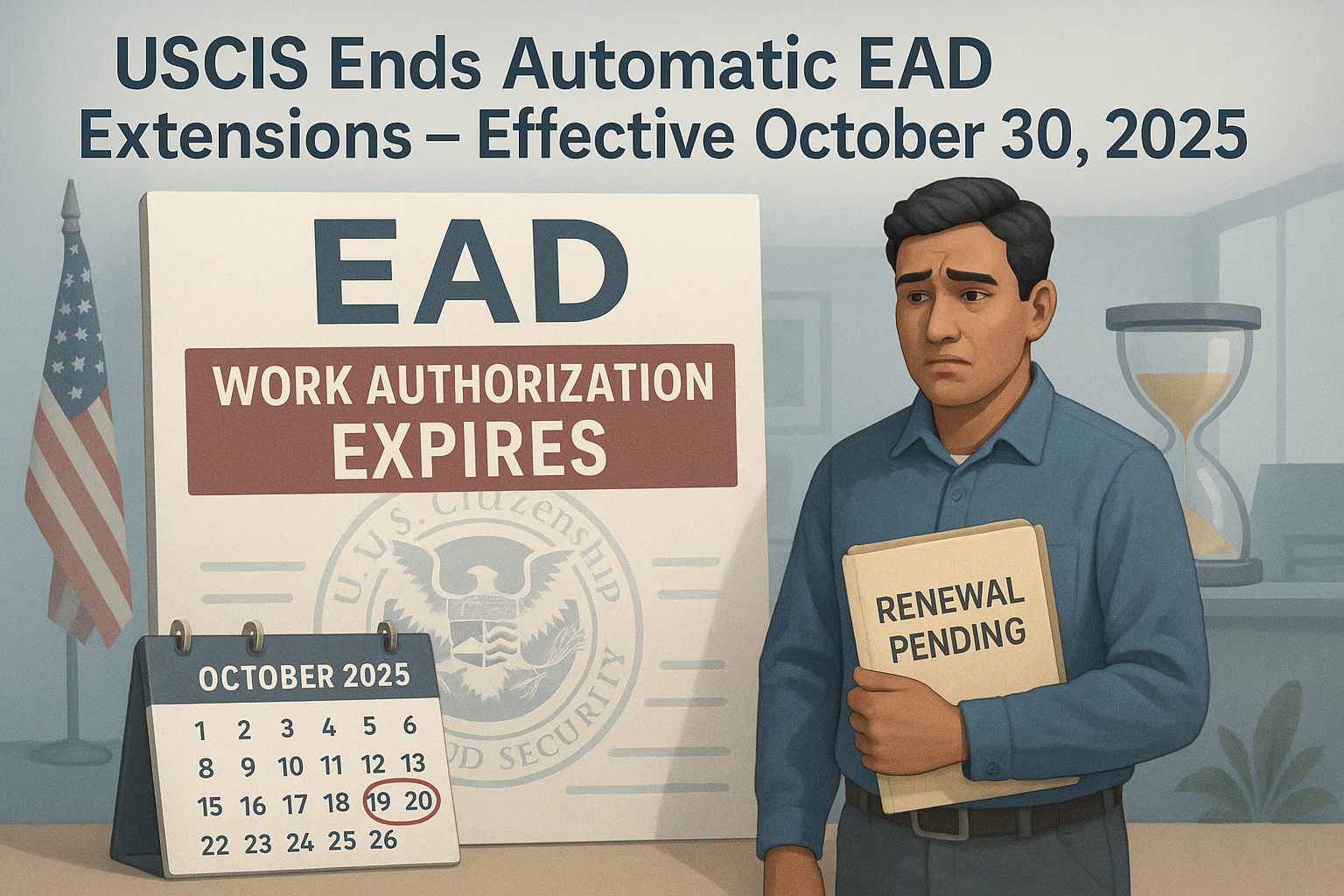
(Effective for New Filings on or after October 30, 2025)
The Department of Homeland Security (DHS) has announced a major policy change that will significantly impact employment authorization renewals for noncitizens in the United States. According to the Interim Final Rule (IFR) set to be published on October 30, 2025, USCIS will end the automatic 180-day extension of Employment Authorization Documents (EADs) for certain categories of renewal applicants.
This rule marks a major shift from long-standing procedures that allowed individuals to continue working legally while their EAD renewal applications were pending with USCIS.
🔍 What the New Rule Means
Under the current system, individuals who timely file Form I-765 (Application for Employment Authorization) for renewal are typically granted an automatic 180-day extension of their existing EAD. This allows them to continue working while waiting for USCIS to adjudicate their new card.
However, the new Interim Final Rule eliminates that automatic extension for renewal applications filed on or after the rule’s effective date.
Here’s what changes:
- Work authorization will now end on the expiration date of the current EAD, regardless of when a renewal is filed.
- Employment authorization resumes only after USCIS approves the renewal EAD or issues another valid work authorization determination.
- The rule is not retroactive — renewals filed before the effective date will still receive the 180-day extension, as currently provided.
- DHS has noted that the change could lead to employment gaps if renewal processing times extend beyond an individual’s current EAD validity.
👥 Who Will Be Affected
This policy affects all individuals filing Form I-765 for renewal on or after the effective date, including but not limited to:
- Adjustment of Status (AOS)-based EAD holders
- H-4 dependent spouses
- Asylum and refugee applicants
- F-1 students on Optional Practical Training (OPT) and STEM OPT extensions
- Other categories of noncitizens eligible for employment authorization under DHS regulations
Essentially, anyone relying on the 180-day automatic extension to maintain employment between EADs will be impacted.
⚠️ Implications for Employees and Employers
For employees, this means that failing to file renewals early could lead to a lapse in employment authorization, which in turn could result in work interruptions and loss of income.
For employers, this rule increases the importance of strict I-9 and E-Verify compliance. Employers must verify that all employees possess valid, unexpired employment authorization before continuing or initiating employment. Failure to do so could lead to compliance violations or penalties.
✅ What You Should Do Now
To minimize the risk of work authorization gaps:
- File renewal applications as early as permitted. Most categories allow EAD renewals to be filed up to 180 days before the current EAD’s expiration date.
- Track your EAD expiration date carefully and plan renewal submissions well in advance.
- Employers should review internal verification procedures to ensure compliance with I-9 and E-Verify rules.
- Consult an immigration attorney if you are unsure about your eligibility category or timing for filing a renewal.
📢 Mantra Law Office Can Help
At Mantra Law Office, we understand how critical uninterrupted employment authorization is for individuals and families. Our experienced attorneys can guide you through the renewal process, evaluate your eligibility timeline, and ensure that your application is filed promptly to avoid unnecessary work interruptions.
We are closely monitoring DHS and USCIS updates regarding this rule and will continue to provide detailed insights and practical guidance as more information becomes available.