

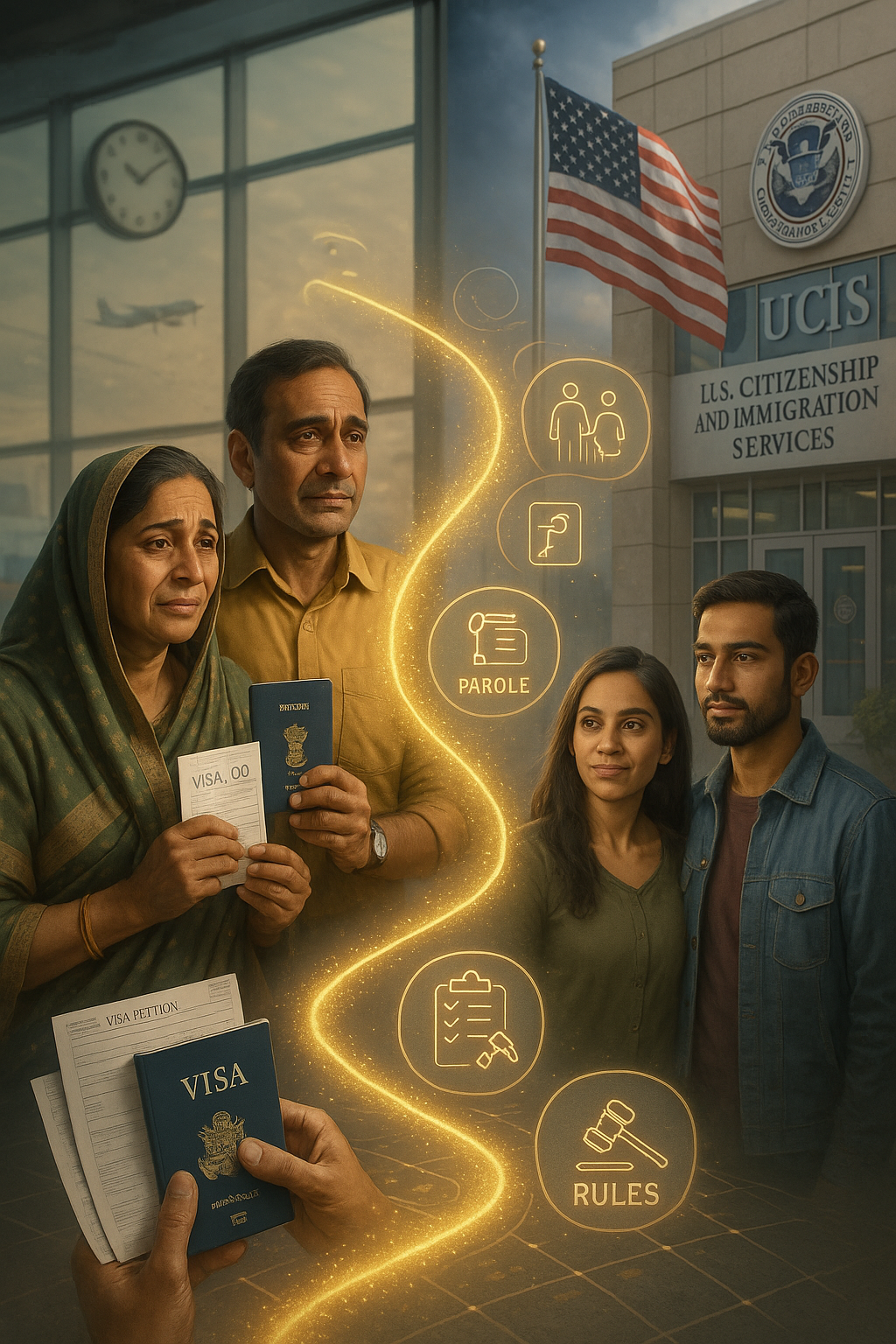
A Comprehensive Guide by Mantra Law
Family reunification has long been a cornerstone of the U.S. immigration system. Yet in 2025, changing enforcement priorities, evolving visa backlogs, modifications to parole programs, and stricter documentation requirements are significantly reshaping the landscape—especially for Indian families.
From parents trying to sponsor their children to adult children seeking to bring their aging parents to the U.S., the rules are becoming more complex. In this in-depth guide, Mantra Law breaks down the latest developments and what Indian families need to know to navigate these shifts smoothly.
1. The New Reality of Family-Based Immigration in 2025
Over the past year, U.S. immigration authorities have tightened scrutiny across all family-based categories. Three major trends are affecting Indian-origin families the most:
1.1. Stricter Documentation Requirements
USCIS is issuing more Requests for Evidence (RFEs) for:
- Birth certificates (especially for applicants from India where records may be incomplete),
- Relationship proof (joint photos, affidavits, DNA testing recommendations),
- Financial documentation demonstrating the U.S. sponsor meets updated poverty guidelines.
This has increased processing delays and denials for cases lacking precise paperwork.
1.2. Extended Backlogs in Family Preference Categories
The Family Preference Visa Bulletin continues to show retrogression for Indian applicants—particularly categories involving:
- F1: Unmarried adult children of U.S. citizens
- F3: Married children of U.S. citizens
- F4: Brothers and sisters of U.S. citizens
Indian families often face wait times of 8–15+ years depending on category, and the backlog pressure is expected to continue through 2026.
1.3. Increased Enforcement of Misrepresentation & Fraud
Authorities have put renewed focus on:
- Marriage fraud,
- False relationship claims,
- Inaccurate or mismatched documents,
- Parents attempting to bring dependents without proper documentation.
Even minor inconsistencies are resulting in interviews and denials.
2. How Policy Shifts Are Impacting Parents Abroad
For many Indian families, the ultimate goal is to bring aging parents to the United States. The policy updates in 2025 are now influencing this process in multiple ways.
2.1. Sponsoring Parents as Green Card Holders
Only U.S. citizens can sponsor their parents. While this rule hasn’t changed, the enforcement around financial requirements has tightened.
Updated rules include:
- Higher income thresholds for Affidavit of Support (Form I-864),
- Requests for joint sponsors to show stronger financial history,
- Increased scrutiny of sponsors’ tax filings.
2.2. B2 Visitor Visa Challenges for Indian Parents
Indian parents seeking to visit temporarily face new hurdles:
- More interviews focused on proving “non-immigrant intent,”
- Increased denial rates for older visitors with strong U.S. family ties,
- Requests for additional financial evidence and ties to India.
Many parents who simply want to attend a child’s wedding, childbirth, or graduation are being denied due to perceived “immigration intent.”
2.3. Longer Decision Timelines for Parole Programs
Humanitarian or special parole programs (including family reunification initiatives) are experiencing:
- Slower processing,
- Heightened security checks,
- Limited discretionary approvals.
Families relying on parole for urgent travel or medical needs are encountering extended uncertainty.
3. Impact on Indian Children and Dependents
3.1. Child Status Protection Act (CSPA) Concerns
Delays in I-130 and I-485 processing are causing many Indian children to “age out.”
CSPA protections apply—but parents must:
- Track priority dates closely,
- File adjustment applications immediately when eligible,
- Keep all documentation timely.
3.2. Children Stuck in India Due to Backlogs
Divided families are becoming increasingly common, especially when:
- One parent is in the U.S.
- Children remain in India for school or due to processing delays.
Waiver options or expedited requests may help, but they require careful legal preparation.
4. Enforcement Shifts Indian Families Must Watch
4.1. Overstays Are Under Increased Review
Parents or dependents who overstay even briefly face:
- Visa cancellations,
- Future entry bars,
- Difficulty proving immigration credibility.
4.2. Premium Processing Is Not Always Beneficial
While premium processing has expanded, family-based applicants should be cautious:
- Faster decisions sometimes mean faster RFEs or denials,
- A rushed application can harm long-term outcomes.
Legal advisors often recommend balancing speed with accuracy.
5. What Indian Families Can Do in 2025
5.1. Strengthen Documentation Early
Gather and notarize documents including:
- Birth certificates
- Marriage certificates
- Adoption papers
- Police clearances
- Financial records
5.2. Prepare Parents for Visa Interviews
Parents must clearly explain:
- Purpose of travel,
- Duration of stay,
- Ties to India (property, pension, responsibilities).
5.3. Avoid Misrepresentation at Every Stage
Even innocent inconsistencies can jeopardize future applications.
5.4. Use Legal Expertise for Complex Cases
Mantra Law helps families with:
- Aging-out protection
- Parole applications
- I-130/I-485 packages
- RFEs & appeals
- Cases involving prior visa denials
- Assigning joint sponsors or financial planning for Affidavit of Support
Legal guidance ensures accuracy and prevents unnecessary delays.
6. How Mantra Law Supports Indian Families in 2025
At Mantra Law, we understand the cultural, emotional, and logistical challenges Indian families face when navigating U.S. immigration. Our team specializes in:
- Parent Green Card filings
- Family-based I-130 petitions
- Visitor visa planning for parents
- Humanitarian parole for urgent cases
- Preparing robust documentation packages
- Immigration compliance for mixed-status families
Whether you’re sponsoring a child, bringing your parents to the U.S., or resolving a complicated case, our attorneys provide clarity, confidence, and strategic action.
Final Thoughts
Immigration pathways for Indian families are becoming more complex—but not impossible. With the right preparation, legal strategy, and understanding of shifting policies, families can still reunite and build secure futures in the United States.
Mantra Law is here to guide you every step of the way.