

A MANTRA LAW Insight
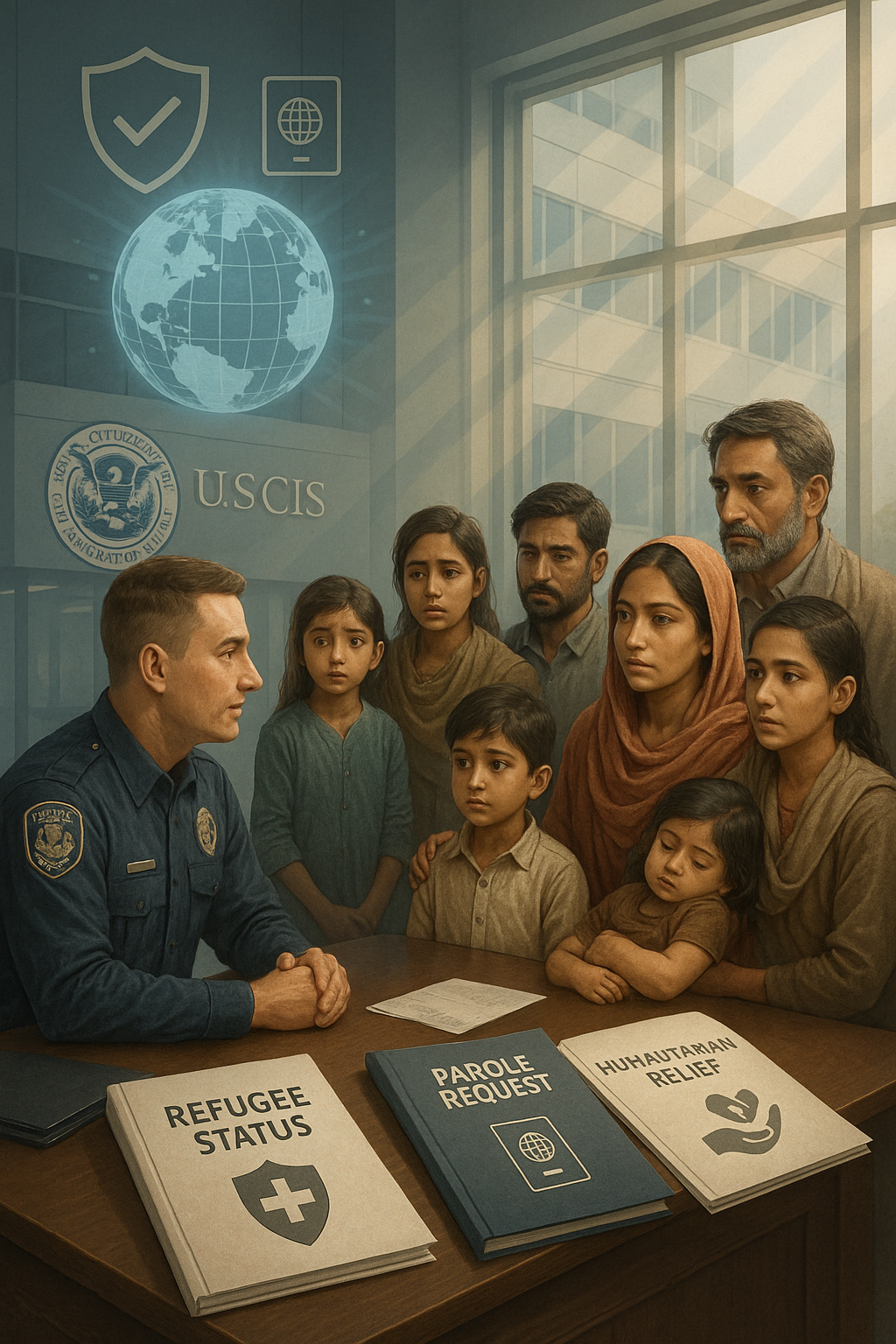
U.S. immigration is going through another wave of shifts—especially when it comes to refugee admissions, humanitarian parole, and emergency protection programs. For many South Asians, these pathways aren’t just policy jargon; they’re real lifelines for families facing danger, displacement, or urgent humanitarian need.
If you’re from India, Pakistan, Bangladesh, Nepal, or Sri Lanka—and you’re worried about a loved one stuck abroad or considering humanitarian options—here’s the full breakdown of what’s evolving and how it may affect you.
1. Refugee Admissions: New Priorities, New Caps
Every year, the U.S. sets a Refugee Admissions Ceiling that determines how many refugees can be resettled.
What’s changing?
- Recent discussions point toward rebalancing regional priorities, meaning more focus on global conflict zones (Middle East, Africa, Eastern Europe).
- South Asia has historically received a smaller share, but family reunification refugees and religious minorities are still priority groups.
- Processing timelines are being reviewed to speed up security checks and interviews.
Why South Asians should care
Many South Asians apply for refugee status due to:
✔ Religious persecution
✔ Violence or political conflict
✔ Threats due to gender, caste, or identity
✔ Family previously resettled in the U.S.
If you or a relative is in a high-risk situation, early preparation and documentation can make a huge difference.
2. Humanitarian Parole: Becoming More Selective
Humanitarian parole lets individuals enter the U.S. temporarily for urgent reasons (danger, medical need, family emergencies, etc.).
Current Trends
- Parole is becoming more selective and scrutinized.
- USCIS is focusing on cases involving immediate risk, not long-term hardship.
- Financial sponsors and proof of safe accommodation are now extremely important.
- Processing backlogs are influencing approval timelines.
Who can qualify?
Humanitarian parole is typically granted when a person:
- Faces imminent harm,
- Needs urgent medical care,
- Must reunite with a U.S. family member in crisis,
- Is fleeing a humanitarian disaster.
How this impacts South Asian families
Families often file parole requests for:
- Elderly parents trapped in conflict zones,
- Children needing medical treatment unavailable in their home country,
- Spouses stuck abroad due to visa complications,
- Victims of trafficking or targeted violence.
Well-prepared applications with strong evidence are getting the best results right now.
3. Emergency Humanitarian Programs: Expanding but Competitive
Programs like Temporary Protected Status (TPS), Humanitarian Refugee Referrals, and Community Sponsorship are evolving.
What’s new?
- More emphasis on community-based support, meaning U.S. groups or organizations can sponsor certain humanitarian entries.
- Victims of natural disasters (floods, earthquakes, political emergencies) may see new protections gradually added.
- South Asians from climate-affected areas—like parts of Bangladesh, Nepal, and coastal India—may qualify when new TPS designations arise.
4. Family Reunification: A Quiet but Important Shift
Humanitarian routes are increasingly linked to family ties.
What this means
- If you’re a U.S. citizen or green card holder, your role in supporting a refugee or parole case is stronger than before.
- Affidavits of support, proof of relationship, and financial documentation now carry heavy weight.
Benefits for South Asians
South Asian families often rely on extended-family structures, which means:
- You may be able to support a sibling, parent, or relative if they’re in danger abroad.
- Strong U.S. ties significantly increase credibility.
5. How to Prepare a Strong Case: MANTRA LAW’s Guidance
If you’re considering refugee status, humanitarian parole, or a relief-based program, here’s what helps:
✔ Gather Strong Evidence
- Medical records
- Police reports
- Human rights documentation
- Threat letters, screenshots, news articles
- Proof of family ties in the U.S.
✔ Prepare a Financial Sponsor (for parole cases)
USCIS increasingly requires:
- Bank statements
- Tax returns
- Income verification
- Detailed support letters
✔ Demonstrate Urgency
Explain the danger clearly and specifically.
✔ Avoid Inconsistent Information
Small mistakes or mismatched details can delay or deny a case.
✔ Work with an immigration attorney
Humanitarian cases are highly discretionary—expert preparation matters.
6. Why These Changes Matter
For many South Asian families, humanitarian pathways can be the only way to:
- Escape danger
- Reunite with loved ones
- Access urgent medical care
- Find stability during crises
With policies shifting, it’s more important than ever to understand eligibility, prepare early, and seek legal guidance.
7. How MANTRA LAW Helps
Whether you’re filing for:
- Humanitarian Parole
- Refugee Status
- TPS or Emergency Protection
- Family Reunification under humanitarian grounds
MANTRA LAW helps you:
✔ Assess eligibility
✔ Gather the right evidence
✔ Build a powerful case
✔ Navigate USCIS and Department of State processes
✔ Respond to RFEs and delays
✔ Protect your family’s future