

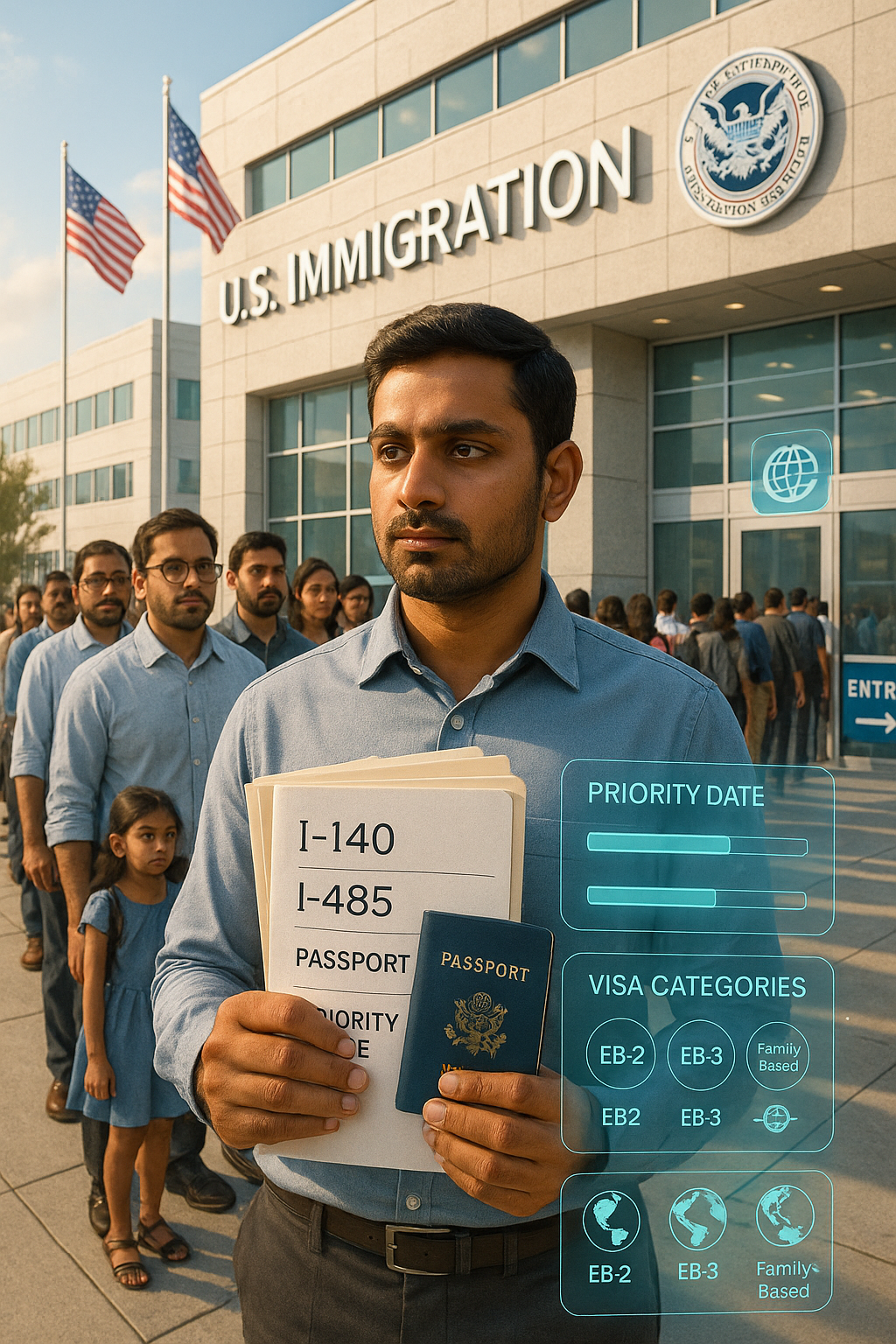
A proactive guide by Mantra Law for Indian nationals navigating long U.S. immigration wait times
For millions of Indian nationals—especially those stuck in employment-based and family-based green card queues—the question isn’t just how long the wait will be, but how prepared they will be once the backlog finally moves.
As legislative discussions, visa recapture proposals, and administrative reforms continue to signal potential movement in priority dates, applicants who stay organized, updated, and ready will be the first to benefit.
This guide outlines how Indian applicants can prepare today to ensure success the moment the U.S. immigration backlog begins to clear.
1. Understanding Why the Backlogs Exist
U.S. immigration wait times for Indian nationals are shaped by:
- Per-country caps limiting visa issuance to 7% per nationality.
- High demand for employment-based (EB-2, EB-3) and family-based categories.
- Past visa wastage, where unused green cards from prior years expired.
- USCIS & DOS processing delays, staffing shortages, and policy shifts.
- Increased scrutiny in employment-based programs.
Although reforms are debated regularly, movement can happen suddenly, and those unprepared risk missing opportunities.
2. The Key to Success: Stay Documentation-Ready
When dates advance, USCIS moves fast — and late submissions can cost applicants months or years.
Stay prepared with updated, organized documentation:
For Employment-Based Applicants (EB-1, EB-2, EB-3):
- ✔ Valid passport (renew at least 12 months before expiry)
- ✔ Updated work experience letters with job duties
- ✔ Educational transcripts & degree evaluations (WES/ECE)
- ✔ Recent pay stubs & tax returns
- ✔ Current employment verification letter
- ✔ PERM and I-140 copies
- ✔ Resume updated to match job duties
For Family-Based Applicants:
- ✔ Birth certificates (correct name & details)
- ✔ Marriage certificates, divorce decrees, adoption orders
- ✔ Police clearance certificates
- ✔ Financial sponsor documents (I-864, tax transcripts, W-2s)
- ✔ Evidence of bona fide marriage (photos, chats, joint accounts)
Many Indian documents often need corrections or new formats. Fix them now—not when priority dates suddenly become “current.”
3. Maintain Your Legal Status in the U.S.
Backlogs can lead to years of waiting — making it essential to stay in valid status without interruptions.
For Students (F-1):
- Keep SEVIS active
- Ensure timely OPT/CPT filing
- Maintain full-time enrollment
For H-1B Workers:
- Track H-1B max-out timelines
- Employer must timely file extensions
- Consider H-1B recapture for travel time
- Avoid changing employer without proper documentation
For Dependent Spouses (H-4 / L-2):
- File EAD extensions 180 days in advance
- Keep marriage documentation updated for stamping
- Track I-94 expirations closely
For Visitors (B-1/B-2):
- Avoid overstaying — even 1 day can jeopardize future visas.
- If staying longer, apply for timely extension.
4. Explore Alternative or Faster Immigration Pathways
Indian applicants often limit themselves to EB-2 or EB-3 — but many have options they don’t explore.
Consider possible faster routes:
EB-1A (Extraordinary Ability)
- No employer sponsorship required
- Faster I-140 processing with Premium
- Suitable for senior professionals, researchers, IT experts, founders
EB-1B (Outstanding Researcher/Professor)
- Ideal for those with publications, citations, awards
EB-5 Investor Visa
- Investment starting at USD 800,000
- Offers relatively faster green card timelines
- Eligible for concurrent filing if in the U.S.
O-1 Visa (Extraordinary Ability)
- Provides temporary solution while building an EB-1A profile
National Interest Waiver (NIW)
- Self-petition
- Suitable for tech professionals, healthcare workers, founders, researchers
- Waives labor certification
- Often faster than EB-2/EB-3 queues
Canadian PR or Global Mobility as a bridge
Some Indian families pursue Canadian PR while maintaining U.S. visa status, giving flexibility as U.S. queues shift.
5. Improve Your Priority Date Strategy
Most applicants do not analyze how specific actions impact their priority date.
Important considerations:
- Upgrading from EB-3 → EB-2 or vice versa may help depending on bulletin trends
- Interfiling (EB-3 to EB-2) can speed up I-485 approvals
- A new PERM with same position can keep the old priority date
- Marriage to a green card holder or U.S. citizen opens new categories
Work with an immigration attorney to chart the best route based on career growth, backlog movement, and risk factors.
6. Stay Updated on Policy Changes
Movement in backlogs often follows:
- Visa recapture bills
- USCIS processing reforms
- DOS operational changes
- Court rulings on H-1B or PERM
- Administrative decisions impacting immigration categories
Subscribe to trusted immigration updates and Mantra Law’s policy alerts to make timely decisions.
7. Plan Financially for Rapid Filing
When priority dates move, applicants may need to pay quickly for:
- Medical exams
- Attorney fees
- I-485 filing fees
- Premium processing
- Biometrics
- Dependents’ filings
Keeping funds ready avoids missed windows.
8. If You’re Outside the U.S.: Prepare for NVC and Consular Processing
Indian applicants applying abroad should:
- Keep DS-260 details accurate
- Maintain updated police clearances
- Track NVC “Documentarily Qualified” status
- Prepare for financial sponsor requirements
- Ensure all civil documents follow correct format (birth, marriage, PCC)
Consulates like Mumbai and Delhi often have backlogs themselves—so preparation is key.
9. Protect Yourself From Common Mistakes
Avoid these pitfalls:
- Letting passport expire
- Ignoring I-94 dates
- Missing RFE deadlines
- Submitting incorrect birth certificates
- Changing jobs without immigration review
- Not informing attorney of address changes
- Overstaying visas
- Assuming the backlog won’t move
- Not retaining all USCIS notices and receipts
10. Why Preparation Pays Off When Backlogs Move
When priority dates advance:
- USCIS may approve I-485s fast
- Applicants with complete documentation will be prioritized
- Missing documents can push you back in line
- Those with financial and immigration readiness act immediately
- Delays of even one month can add years to wait times
Being prepared is not optional — it’s strategic.
Final Thoughts: Mantra Law Can Help You Stay Ahead
Backlog movement can be unpredictable — but preparation is not.
Mantra Law assists Indian nationals with:
- Assessing fastest immigration categories
- Building stronger EB-1 / NIW profiles
- Ensuring documentation readiness
- Filing timely extensions & maintaining status
- Handling interfiling and I-485 strategies
- Preparing for NVC and consular processing
- Offering real-time updates on immigration changes
When the backlog clears, the applicants who succeed won’t be the lucky ones—
they will be the prepared ones.